Monday, April 14, 2008

Ultimate Perversion

*Lead poisoning due to adulterated cannabis *

In recent months several cases of lead poisoning were observed in
Germany, mainly in the region of Leipzig. Some cases also occurred in
other places, such as Munich and Vienna, Austria. According to a
report published in the New England Journal of Medicine 29 patients
were admitted to four different hospitals in the greater Leipzig area
with classic signs and symptoms of lead intoxication, which had not
occurred in Germany in recent decades. All patients were regular
cannabis users and lead was detected in cannabis of some patients.

A criminal investigation was begun to find the causer of the lead
adulteration. Lead was obviously added to the drug by drug traffickers
to increase weight and profit. An anonymous screening program for
cannabis users was started and further 95 subjects were found, who had
blood levels of lead that required treatment. The Drug Commissioner of
the Federal Government, Sabine Baetzing, issued a warning on cannabis
that may be adulterated by lead. Several German organisations called
for the possibility for cannabis users to grow their own for personal
use to reduce the risks of cannabis use.

The article is available at:
http://content.nejm.org/cgi/content/full/358/15/1641


(Source: Busse F, Omidi L, Leichtle A, Windgassen M, Kluge E, Stumvoll
M. Lead poisoning due to adulterated marijuana. N Engl J Med
2008;358(15):1641-2. - www.cannabis-med.org )


****************


This report points out the dark extremes of human greed, engendered by inflated black market prices, made inevitable by the "drug war." Social poicy that is structured to enable contamination of a healing herb with poison in order to increase profit for the black market is ultimate perversity on a societal scale.

Friday, April 11, 2008

Drug policy, food security & nutrition

The relationship between drug policy and food security/nutrition is incalculable. I recently posted the following information to the UN forum on Food Security and Nutrition in an attempt to bridge the two discussions:

To some degree, rising food prices are the result of imposed protein scarcity, attributable in large part to the so-called "drug war." 'Marijuana' prohibition has effected food security and nutrition by restricting industrial hemp cultivation, limiting availability of the world's most nutritionally complete food resource, and editing awareness of the benefits of hemp agriculture. Emphasis on GM soy for protein production creates dependence on increasingly expensive agronomic inputs, characteristic of chemical-intensive farming.

The following report gives insight into the economic benefits of bio-intensive farming.

"Bio-intensive Farming System: Economic Transformation Achieved by the Farmers."
Journal of Himalayan College of Agricultural Sciences & Technology
Green Field, 2007, volume 5, issue 1
Page 96

http://www.hicast.edu.np/publications/Janauray-June_2007_vol_5_issue_1.PDF

Now that the Executive Director of UN Office on Drugs and Crime, Mr. Antonio Maria Costa, has stated that the present drug policy is not "fit for purpose" I suggest there may be an opportunity to re-evaluate the impact of drug policy on food security and nutrition. Considering the unique and essential food value of hemp seed, the possible benefits of reintroducing hemp into the agricultural rotation cannot be understated. A return to bio-intensive farming would be much more feasible if hemp agriculture was not stigmatized by association with drug crops.


"Making drug control 'fit for purpose': Building on the UNGASS decade"* can be seen in full here:
http://www.tdpf.org.uk/drug%20control%20%27fit%20for%20purpose%27.pdf

Monday, April 7, 2008

Essential As Sacred

Cannabis agriculture has so many potential benefits that, considered as an integrated whole, the combined attributes of Cannabis make it a proximate, functional necessity for addressing climate change while establishing sustainable energy economics. Specific to both global warming and global broiling (increasing solar UV-B radiation), Cannabis is potentially the best choice for biofuels production/climate change mitigation for several reasons.

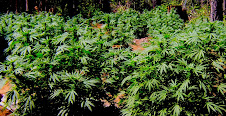
An essential rotational crop, Cannabis sequesters a ton of carbon per acre, per year, that the plant converts into a cellulose- and fiber-rich stalk. The stalk can be made into high grade building materials, cloth, paper and biodegradable plastics that serve as effective carbon sinks. The growth characteristics of Cannabis make it a useful crop for the production of oxygen, for expanding the world's arable base, soil re-mineralization, stopping soil erosion, breaking up soil compaction, and for the detoxification of contaminated soils.

Hemp also produces an abundance of "monoterpenes" which rise into the atmosphere, where they reflect solar radiation and seed cloud formation. The clouds that form around monoterpenes are brighter and last longer than other clouds, protecting the surface of the Earth from increasing UV-B radiation, while producing rain.

The fuel production potential of Cannabis includes methane, methanol, diesel seed oil, pyrolytic charcoal, and hydrogen.

"BIOMASS CONVERSION to fuel has proven economically feasible, first in laboratory tests and by continuous operation of pilot plants in field tests since 1973. When the energy crop is growing it takes in C02 from the air, so when it is burned the C02 is released, creating a balanced system."

In addition, Cannabis produces an abundance of protein-rich seed that contains three essential fatty acids, nutritionally significant amounts of all nine of the essential amino acids, vitamins, minerals, and carbohydrates.

The essential oils steam-distilled from hemp are being shown to have therapeutic effect for treating many illnesses including cancer, diabetes, viruses, infection, and much more. The essential oils also have pesticideal effect, which can be useful for protecting other crops and food stores.

Finally, because Cannabis adapts well to a wide variety of soil and climate conditions, hemp is potentially a globally distributed, sustainable organic feedstock, allowing for efficient, regionally-based economies.

See:

HEMP FOR FUEL
Excerpted from "Energy Farming in America," by Lynn Osburn
http://www.druglibrary.org/schaffer/hemp/hempfuel.htm

Monoterpenes in Cancer Prevention and Therapy
Townsend Letter for Doctors and Patients, August, 2001 by Mark A. Brudnak
http://findarticles.com/p/articles/mi_m0ISW/is_2001_August/ai_78177209/pg_1


============================

Saturday, March 22, 2008

Individual Spiritual Obligation

Every generation inherits challenges and obligations. We are all charged with evolving into harmony with the Natural Order, and preserving the freedoms won by previous generations.

Our gratitude to previous generations and our responsibility to the people of the future has been made with mindful consideration of countless sacrifices and the enormous courage it takes to survive, while bringing children into societies at war. To impose a false "drug war" against the free organic agricultural market is worse than self-defeating. It is defeating for everyone who came before, and all who will follow us.

The world's most ancient global culture does not require nor ask for permission to exist. Cannabis has been a critical resource throughout recorded history. Certainly, the primitive, wars-for-chemicals-based governments that presume to prohibit the necessary, full spectrum of organic agriculture and regional economics it affords, become less credible as the economy, the environment, and our social structures fall apart in tragic accelerating, synergistic collapse.

Only an outlaw government would continue to impose scarcity of the world's most nutritious seed in the middle of a global food crisis.

Only an outlaw government would fail to identify Cannabis an essential agricultural resource, educate people about its uses, and encourage farming of an abundant asset to every community for every creature on this planet.

The Cannabis plant has never been truly illegal, because it is nutritionally unique and essential. Spiritual dimensions of culture have always been based in sincere gratitude for the harvest bestowed by The Creator of all life, whatever name that's been given. Presumably, in the United States, the Constitution protects our "freedom of religion" which is ultimately individually interpreted.

On a planet being broiled by increasing intensities of UV-B radiation, experiencing increasing temperatures and becoming increasingly polluted, it is critical for mankind to re-valuate Cannabis for it's practical industrial uses, and as a "strategic food resource" available by "essential civilian demand." For these reasons, the cultivation of Cannabis is a serious spiritual obligation, shared by all people who know the truth about the world's most useful and nutritious "herb bearing seed."

That there are illegal statutes still being imposed by unobjective courts is no good excuse not to farm Cannabis. Faced with synergistic collapse of environment, economics, and social structures, we have no time left to argue. Unless someone can give one good reason that's true not to grow Cannabis, then this Spring is critical to mankind's recovery from the imbalances that have been inflicted on the free agricultural market for the past seventy years.

Our spiritual obligation to survive is an individual one, making spirituality an individual right, protected by our so-called "First Freedom," Article One, freedom of religion, in the Bill of Rights. Anyone who challenges my individual right of spiritual growth and development is welcome to express their opinion regarding my extreme regard and primary valuation of Cannabis.

I can demonstrate the value of this "green herb" in many ways, until they too will agree that it is a truly sacramental species in that it allows mankind to honor the obligation we have to evolve into harmony with the natural ways of living, out of love and concern for our children and the creatures with whom we share the Earth.

I wish everyone an abundant harvest and invite your support to revaluate Cannabis for what it is truly worth.

Wednesday, March 5, 2008

The End of the Argument

Since time is the limiting factor in the equation of survival, people everywhere are justified in taking responsibility for the true value of hemp, without further penalty.
Dear All,

The following are my feelings about the recent release by ENCOD regarding the UNGASS in Vienna.

Please contact me to support a federally enforceable end to Cannabis prohibition this Spring, under the protection of Article One, individual freedom of religion. Every planting season missed is gone forever. Depending on environmental, economic and social catastrophes looming predictably ahead, we may not get another chance to reclaim our Constitutionally protected freedom to farm as a demonstration of love and respect for all the blessings afforded by Cannabis. If the Constitution is suspended, as it could be at any time, then it will be much harder to recover.

I trust I'm wrong about the approaching synergistic collapse and the future is brighter than it looks, but even my optimism is wearing thin. We don't have any time at all to argue further about the true, essential value of Cannabis agriculture. Abundance of resources, evenly distributed around the planet, could be effective in disempowering the black market while creating the necessary, concurrent economic surge toward balance. Partnering with Nature to heal the environment, it is much more efficient to empower regional economics based in abundant, organic agricultural feedstocks.

If there's one good reason that's true, not to "sow hemp everywhere" then someone had better state it now, because otherwise, we share an obligation to overcome the intransigence, and begin farming everywhere possible, without further discussion. To do otherwise would require that someone take responsibility for the malnutrition, illness, and starvation of literally billions of people over several generations during the last seventy years.

In addition, the atmospheric aerosols produced by hemp are our best defense against global broiling, the most proximate threat to our existence.

It is beyond moral accountability to induce essential resource scarcity on such a scale. I invite inquiry and investment in the agriculturally abundant and clean biodynamic garden and farms economy.

for peace,

Paul
California Cannabis Ministry
831 588 5095

========


Bravo,
to all who helped to produce a fine statement of reason.

If I could be at the Drug Peace March I would carry a sign that said,

"DRUGS DON'T MAKE SEEDS,
HERBS DO"

on one side and Genesis 1:29
"every herb bearing seed...and every green herb"

on the other. Spiritual dimensions of the ancient Cannabis culture potentially afford immediate legal legitimacy to individuals who claim their freedom of religion in a sincere way.

If I could be at the Press Conference I would add that because of it's exceptional nutritional value and enormous environmental benefit, Cannabis agriculture warrants in-depth, public revaluation as an unique and essential organic agricultural resource.

Prohibition of 'marijuana' as obscured the world's oldest global culture, inducing scarcity and fundamental imbalance.

--- "encod.org" wrote:

> EURODRUG - INFORMATION LIST OF THE EUROPEAN COALITION FOR JUST AND EFFECTIVE DRUG POLICIES
> Dear friends,
>
> Herewith you find the last press release for Vienna, thanks for sending
> it to all your press contacts (and please send me a translation in your
> language so I can send it to journalists in Brussels, most of the
> translation you can find in the latest bulletin..)
>
> Best wishes,
>
> Joep
>
> European NGOs march for drug peace in Vienna
>
> Dear journalist,
>
> On 7 March, from 17.00 onwards, a Drug Peace March will take place to
> the seat of the United Nations Commission on Narcotic Drugs in Vienna.
>
> The march marks the start of a counterevent organised by the European
> Coalition for Just and Effective Drug Policies (ENCOD) on the occasion
> of the annual meeting of the CND that will take place from 10 to 14
> March 2008. The purpose of the CND meeting is to evaluate the results of
> a ten year strategy that was decided upon in New York in 1998, a
> strategy whose goal was “to eliminate or significantly reduce the
> illicit manufacture, marketing and trafficking of drugs”.
>
> According to the latest figures of the UN Office on Drugs and Crime, the
> production of illegal drugs in the past ten years has increased, with
> 100 % in the case of opium, 19 % in the case of cocaine, and 40 % in the
> case of cannabis.
>
> ENCOD, an independent platform of NGOs and individual citizens involved
> in the drug issue as consumers, health workers or researchers, maintains
> that the prohibition of drugs maximises the burden for those with little
> or no participation in the drug market, while it has no measurable
> impact on the global size of this market at all. "In fact", says ENCOD,
> "drug prohibition increases the size and negative repercussions of this
> market."
>
> In a message to the CND meeting (see
> http://www.encod.org/info/ENCOD-BULLETIN-39.html ), ENCOD wishes the
> governments’ delegates in the CND meeting "a clear head. You will have
> the opportunity to make a historical contribution to improve the living
> standards for millions of people, and at the same time attack the main
> income source of organised crime."
>
> ENCOD proposes that governments "adopt non-repressive strategies in drug
> policy that do not threaten the livelihood of peasants in developing
> countries, do not damage the health of consumers and do respect the
> rights of citizens, such as the right to grow and use natural plants for
> personal consumption. Strategies should be implemented that would create
> legal means for the production and use of hemp/cannabis, opium and coca,
> plants that have served humanity for thousands of years."
>
> The counterevent will also include a a conference with (inter)national
> experts in the Vienna University (Altes AKH). For more information
> please see http://www.encod.org/info/VIENNA-2008-TEN-YEARS-AFTER.html
>
> ENCOD invites the representatives of the media to a Press Conference
> with some organisers and speakers of the conference.
>
> Place: Cafe Landmann, Dr. Karl Lueger Ring 4, 1010 Vienna
>
> Time: Friday 7 March - 11.00 hs
>
> Contact for more information:
>
> Joep Oomen – ENCOD Coordinator
> Tel. 0699 816 12676 / + 32 (0)3 293 0886 / + 32 (0)495 122644
> E-mail: info@encod.org
>
> Otmar Pusch
> Tel: 0681 1036 0480
> E-mail: pusch.otmar@gmx.at
>
> Andreas Holy
> Tel: 0699 1622 8661
> E-mail: a.holy@found.at
>
> --
>
>
> --
>
>
>
> EUROPEAN COALITION FOR JUST AND EFFECTIVE DRUG POLICIES
>
> Lange Lozanastraat 14 – 2018 Antwerpen - Belgium
>
> Tel. + 32 (0)3 293 0886 – Mob. + 32 (0)495 122644
>
> E-mail: info@encod.org / www.encod.org
>
>

Friday, February 15, 2008

Regarding the Commission on Narcotic Drugs, Fifth report of the Executive Director

Regarding the Commission on Narcotic Drugs
The world drug problem
Fifth report of the Executive Director
http://www.encod.org/info/IMG/pdf/UNREPORT2008.pdf

Pg. 29 :
"Illicit drug crop eradication and alternative development
(e) Donors, affected States and other relevant key development partners
should examine innovative ways to promote environmentally sound alternative
development programmes."

In this document, the United Nations has failed to assess, or even acknowledge, the immense harm engendered by the "drug war," which is imposing critical food insecurity and malnutrition on countries where industrial hemp is prohibited. The United Nations is apparently in denial of the looming global food crisis and refuses to recognize the world's most nutritious seed as food for humans, as it fails to account for seven decades of protein production losses and poverty imposed, by banning a critical industrial feed stock.

I interpret "innovative ways to promote environmentally sound alternative development programmes" as a mandate to cultivate industrial hemp. As long as prohibition continues to profit the bureaucracies producing these reports, over-paid bureaucrats will continue to spew drug war rhetoric and propaganda in lieu of a responsible effort to address problems attributed to drug use, that are in reality created by the "drug war" itself.

As far as I can tell, "religious" freedom is the most potent protection there is against the drug war machine. International treaties and most governments are bound by law to protect people's right of religious freedom. Whether we are protected as individuals, or it is necessary to join a "church" to be legally legitimate, seems to be the question.

Because Cannabis agriculture is the world's oldest global culture, it does not require permission to exist from recently established governments. Because of environmental, economic and social imbalances being induced by Cannabis prohibition, there is no obligation to obey laws that are transparently perverse.

With everything we know of the true value of Cannabis, if mankind doesn't initiate a massive global planting of industrial hemp this spring, then we must recognize that we are facing a much greater threat than global warming. Economic intransigence has institutionalized prohibition of the world's most useful and nutritious crop. Our most proximate and potent strategy for addressing climate change is being suppressed.

Because Cannabis produces atmospheric aerosols called "monoterpenes" that reflect solar radiation back into space and seed cloud formation, while sequestering a ton of carbon/acre/year, the cost of the so-called "drug war" in hindering climate change mitigation, has driven the cost of prohibition up, far beyond accountability.